BeMagic!, Erne SWIMRUN, GearUp, MagicSwim, Swimrun
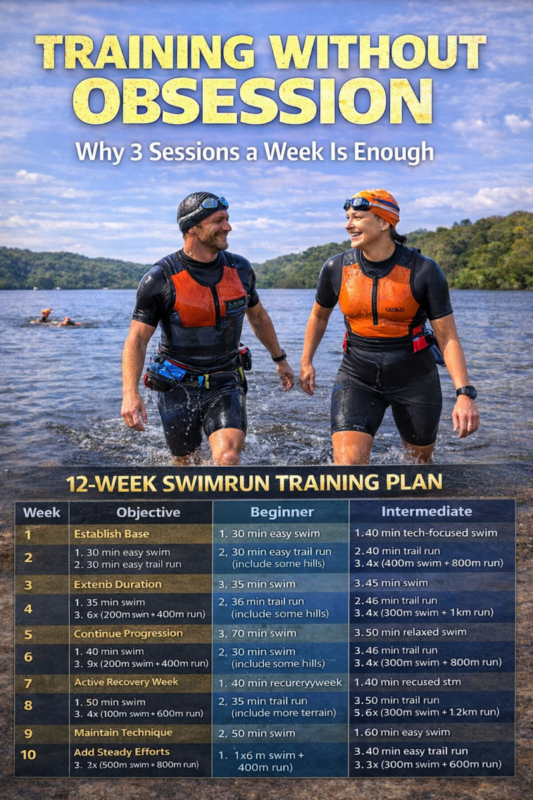
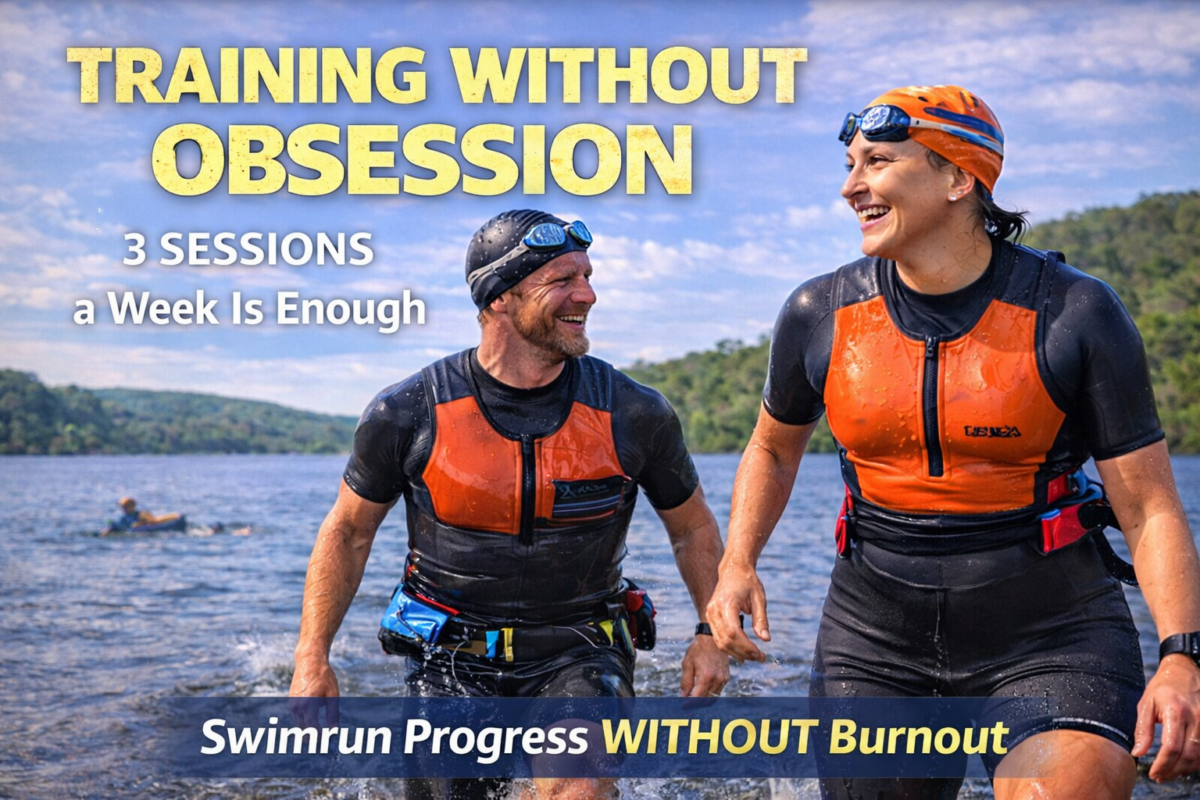
Training Without Obsession
Mar
Why 3 Sessions a Week Is Enough
Scroll through social media and you’d think preparing for a swimrun requires military discipline, double sessions, 5am alarms, ice baths and spreadsheets.
It doesn’t.
For most people lining up at Mana Art Erne SWIMRUN 2026, three focused sessions per week are more than enough.
Not average sessions.
Smart sessions.
There’s a difference.
⸻
The Myth of “More Is Better”
Endurance culture loves volume.
More miles.
More metres.
More data.
More suffering.
But swimrun isn’t about elite perfection. It’s about controlled resilience — being able to move from water to trail and back again without falling apart.
That doesn’t require obsession.
It requires consistency.
Three quality sessions done every week for 12–16 weeks will outperform random five-session weeks followed by burnout.
⸻
The Simple 3-Session Structure
If you’re balancing work, family and life (which most of us are), this structure works.
- Swim Session – Technique First
45–60 minutes.
Focus on:
• Relaxed breathing
• Bilateral sighting
• Swimming continuously without panic
You don’t need monster sets.
You need confidence in open water rhythm.
If you’re pool-based, build control.
If you’re already comfortable, add short steady efforts.
Calm swimmers are fast swimmers.
⸻
- Run Session – Trail Strength
45–60 minutes.
Not a road 10k time trial.
Think:
• Mixed terrain
• Rolling hills
• Cadence control
• Running on tired legs
Swimrun running is rarely flat and smooth. Your legs need to adapt to uneven surfaces and transitions from cold water.
Strength over speed.
⸻
- The Combo Session – Your Secret Weapon
This is where the magic happens.
Short swim → short run → repeat.
Example:
• 400m swim
• 1km run
• 400m swim
• 1km run
It doesn’t need to be long. It needs to feel slightly awkward — because that’s the point.
You’re teaching your body not to panic during change.
And that skill is worth more than VO₂ max numbers.
⸻
What You’ll Notice After 6–8 Weeks
• Your breathing settles faster exiting the water
• Your legs feel less heavy on the first kilometre of running
• You recover quicker between efforts
• You stop overthinking transitions
That’s adaptation.
Not obsession.
⸻
The Recovery Advantage
Here’s what nobody tells you: training three times per week improves recovery quality.
You’ll:
• Sleep better
• Avoid overuse injuries
• Stay motivated
• Arrive fresh on race day
Overtraining is the silent performance killer in amateur endurance sport.
Under-recovered athletes don’t perform bravely.
They survive.
⸻
But What If I Want to Do More?
You can.
But ask yourself why.
Is it purposeful?
Or is it anxiety?
If you’re progressing steadily, feeling strong and hitting sessions with energy — you’re doing it right.
Remember: the goal is to arrive at the shoreline of Mana Art Erne SWIMRUN 2026 confident, not exhausted from months of proving something to yourself.
⸻
The Bigger Picture
Swimrun rewards rhythm.
It rewards mental calm.
It rewards efficiency.
It does not reward burnout.
Three sessions per week:
• One swim
• One run
• One combo
Done consistently.
That’s your blueprint.
⸻
Final Word
Elite athletes train like professionals because it’s their profession.
You’re training for challenge, experience, community — and the moment you run out of the water into fresh air with a smile.
That moment doesn’t require obsession.
It requires preparation.
And three sessions a week is enough.